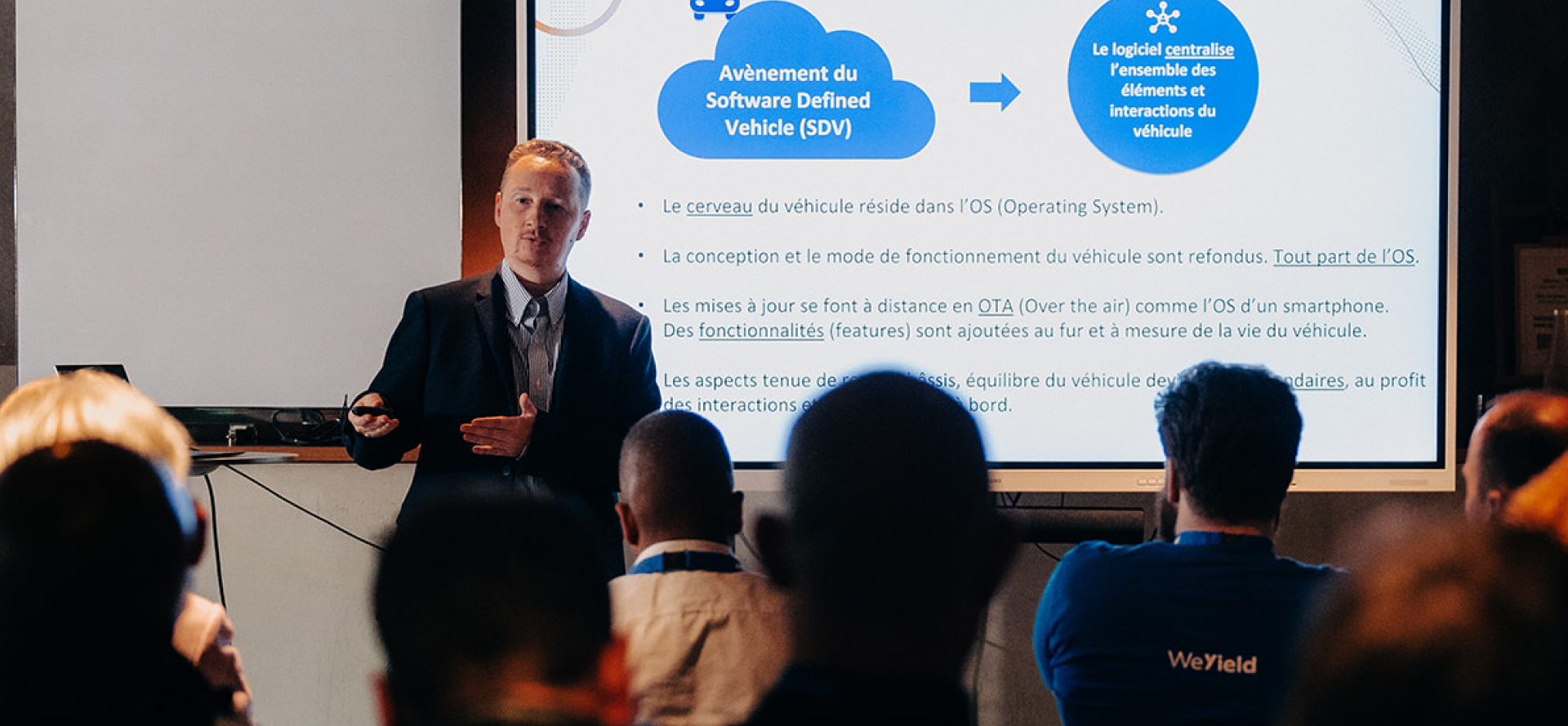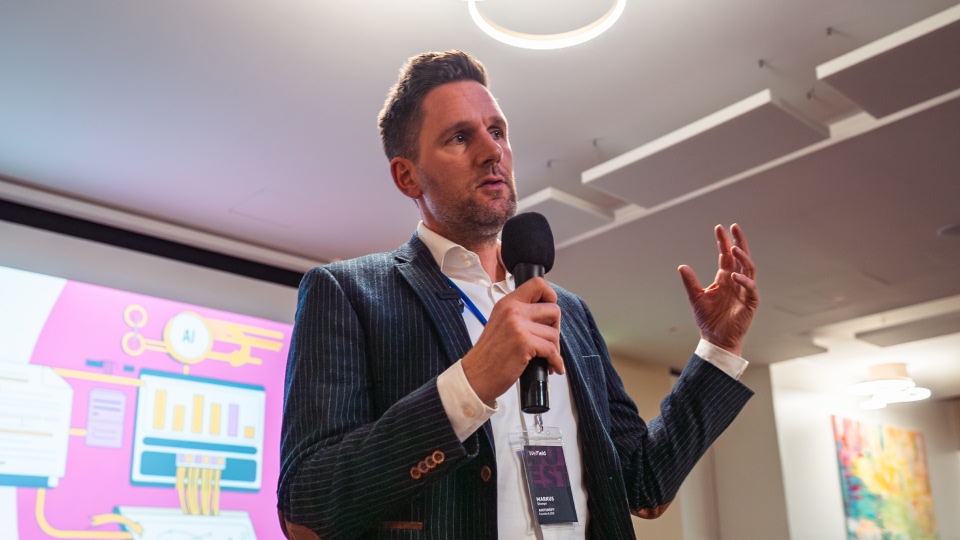
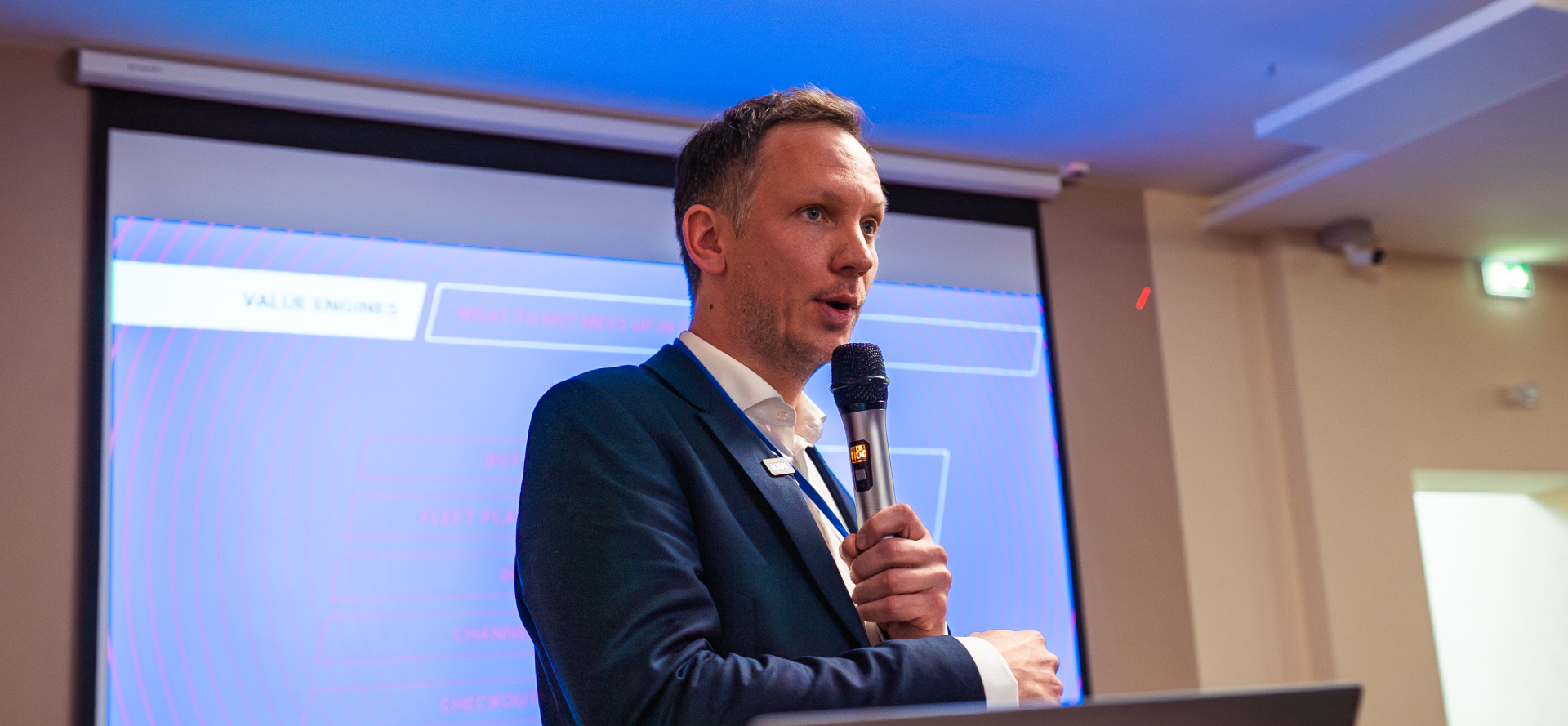

When Stefan Schösser stepped on stage at the Revenue Management Conference 2025 during ITB Berlin, he opened with a sentence that instantly caught the room off guard:
“Pricing is not a pricing issue.”
Not exactly what revenue managers expect to hear at a conference about revenue. Yet that’s precisely why the audience leaned in.
Stefan knows the car rental world from the inside. Years spent managing pricing for Sixt’s global franchise network, combined with his consulting work at Decurade, give him a sharp view of what truly breaks inside pricing operations. Spoiler: it’s rarely the price itself.
Why Pricing Still Matters (More Than We Say Out Loud)
Before getting into the why, Stefan gave a simple example many operators found painfully familiar.
Imagine a fleet of:
- 1,000 cars
- 60 percent fleet use
- RPD at 47 EUR
Increase both fleet use and RPD by just 1 unit and the company collects over 400,000 EUR in additional contribution. That’s not a miracle. It’s the nature of a business where small moves create massive swings.
But Stefan didn’t stop at the numbers. He shifted the conversation to something deeper.
The Real Problem: The Missing Connections Inside the Company
You know what? Most pricing problems aren’t about pricing at all. They arise because the business operates in silos.
Stefan calls this the “fail of connectivity.” And it happens everywhere: independents, franchise groups, large corporate networks.
He described the usual picture:
A skilled analyst sits alone, crunching numbers, updating prices, adjusting tables. Meanwhile, fleet planning makes decisions without looping in pricing. Operations adjust movements without warning. Finance pushes targets without sharing updated costs. Suddenly, everyone is rowing in different directions.
That’s when pricing becomes chaotic.
Not because the price is wrong, but because everyone around the pricing is disconnected from it.
This is exactly why WeYield built tools like the Fleet Planning module. Strong pricing needs accurate fleet data, not guesses or outdated spreadsheets.
Where Things Break Most Often: Controlling and Pricing
Stefan highlighted one critical relationship that often fails quietly:
- Pricing and controlling.
- Base rate calculations depend on controlling.
- Threshold design depends on controlling.
- Channel contribution depends on controlling.
- Budget expectations depend on controlling.
But in many companies, these teams barely speak. Pricing runs on instinct. Controlling runs on historical templates. Nobody updates the actual cost structure. And thresholds drift away from reality.
Stefan gave a simple question to ask yourself:
“Does your pricing team know the real cost of a rental today, not last year?”
If the answer is “not exactly,” then pricing becomes guesswork.
You can read more about thresholds and margins in our Revenue Management Guide for car rental operators.
Channel Mix: The Silent Variable That Can Sink RPD
One of the most striking moments was when Stefan showed how channel mix hides the true health of pricing.
A company increased RPD in a touristic segment by 2.5 EUR. Great news, right?
Not really. Because the channel volume exploded so much that the total effect became zero.
In other words, they improved prices but diluted impact.
That’s why WeYield’s Analytics suite tracks both price and mix effects. Otherwise, you celebrate wins that don’t exist.
Low Season Temptations: Should You Follow Competitors Downwards?
If you’ve ever priced in February, you know the drill. Competitors drop to 20 EUR a day. Someone in the office suggests following them. Someone else insists it’s necessary “to stay in the game.”
Stefan opened the conversation with a quiet but sharp question:
“If you drop your price, can you realistically produce the extra volume needed to cover it?”
Often the answer is no. Sometimes very no.
He reminded operators that chasing low-cost players in low season can destroy margin for months. It’s a psychological trap disguised as a pricing strategy.
So… When Is Pricing Actually a Pricing Issue?
Stefan circled back to his original statement. Pricing becomes a pricing issue only when the operating system is mature enough that:
- data is reliable
- fleet planning is structured
- channels are measured
- thresholds are updated
- teams communicate
- tools provide consistent signals
If these elements aren't stable, then even the smartest formula will fail.
This is why WeYield designed the Car Rental Operating System as a set of connected modules instead of isolated apps. Pricing needs the whole ecosystem, not just a screen with numbers.
AI Helps, But Only When the House Is in Order
Stefan made it clear: AI will be essential in the next years. The operators who use it well will outperform those who don’t. But bringing AI into a broken system is like installing a high-end navigation device in a car with flat tires.
It looks good.
But you’re not going anywhere.
Many companies fail because they want advanced automation while still relying on outdated processes or incomplete fleet information. Someone joked about operators running on MS-DOS. The room laughed because it wasn’t entirely a joke.
Stefan wrapped the idea nicely:
“Before asking for an Einstein machine, make sure your company knows how to count.”
Final Takeaway: Fix the Connections First, Then Fix the Pricing
Stefan ended with a message the industry needed to hear:
Pricing only works when everything around it works.
And only when the teams talk every single day.
You know what? It’s simple. But simple is often the hardest part.
Ready to Strengthen Your Pricing Foundations?
If this session resonated with you and you want to explore how WeYield supports operators with fleet planning, pricing automation, channel insights, and revenue optimization, we’d be happy to talk.
About the Speaker: Stefan Schösser
Stefan Schösser is the Managing Director of Decurade Consulting, a Munich-based firm helping car rental and mobility operators build systems that run smoothly without constant oversight. With more than ten years of experience in pricing, revenue, and operational design, Stefan has held leadership roles at Sixt, ATU, and multiple international franchise networks.
His work focuses on creating operating systems, pricing frameworks, and commercial structures that help companies scale reliably while improving the way teams collaborate across fleet, finance, and revenue functions. Known for his clear, practical approach and deep industry knowledge, Stefan now supports operators worldwide in strengthening their pricing maturity and long-term profitability.
Watch Stefan's Talk