
Understanding the SDV Architecture
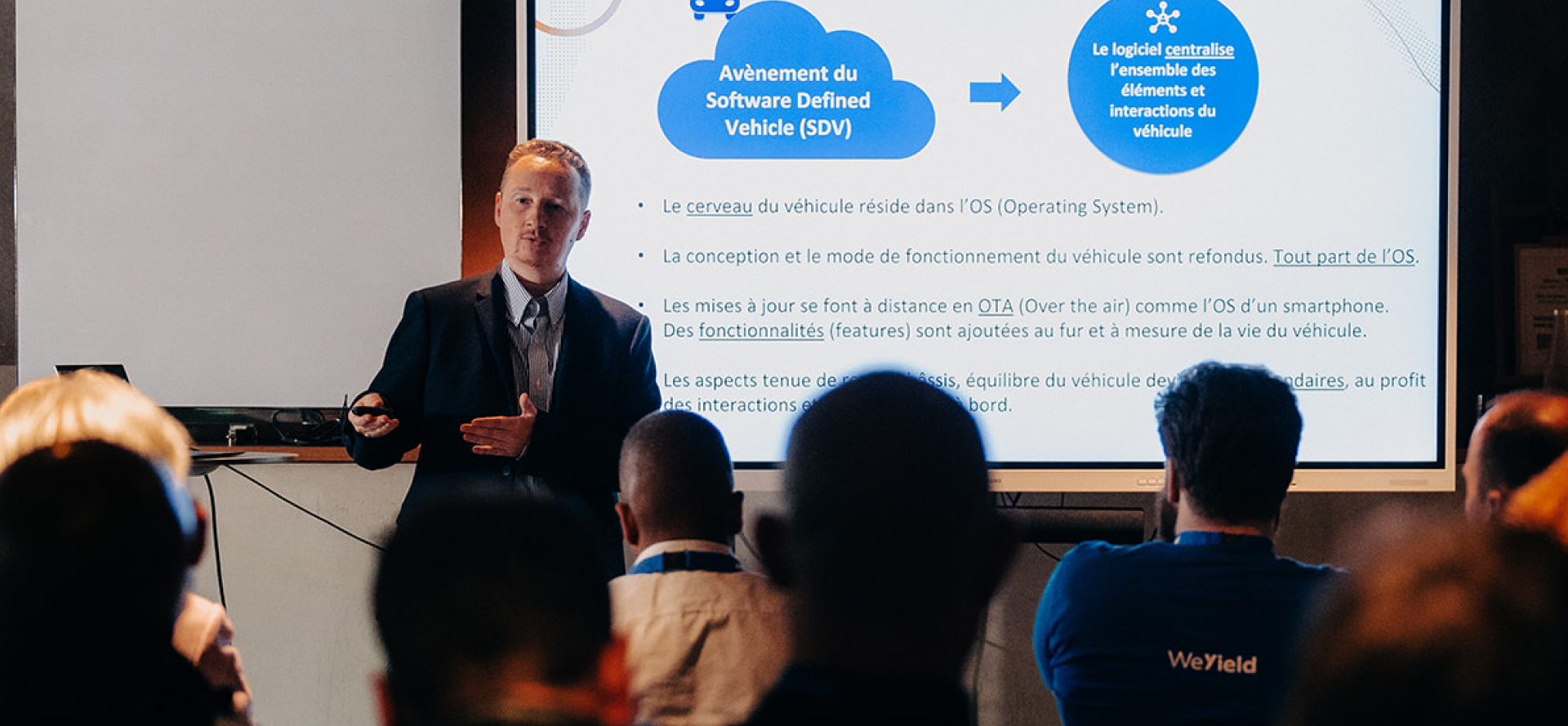
At the Forum WeYield Paris 2024, Romain Stutzmann highlighted a fundamental shift in how cars are built. Traditionally, vehicles utilized a "distributed architecture," where hundreds of independent Electronic Control Units (ECUs) managed single functions like power windows or braking.
The SDV flips this. It relies on a centralized E/E (Electrical/Electronic) architecture. This means replacing those hundreds of small units with a few high-performance domain controllers that handle everything from Infotainment to Advanced Driver Assistance Systems (ADAS) on a single hardware cluster. This decoupling of software from hardware allows for Over-the-Air (OTA) updates, meaning a vehicle can actually improve its performance or add features long after it has joined your rental fleet.
The Sovereignty Struggle: Google vs. The World
Let’s talk about the OS. You know what? This is where the real battle for your customer is fought.
- The "Outsourced" Model: Players like Renault are leaning heavily on Android Automotive OS (AAOS). This isn't just phone mirroring like CarPlay; it is a deep integration where Google controls the climate, defrosting, and navigation natively.
- The "Proprietary" Model: Tesla and newer Chinese entrants like Xpeng or Xiaomi are building their own full-stack OS. Tesla famously refuses to integrate Waze or CarPlay because they view Google as a direct competitor for the driver’s attention and data.
For a rental operator, the risk of the "Outsourced" model is commoditization. If every car—whether it’s a Renault or a Volvo—feels like a generic Windows PC inside, you lose the ability to provide a unique brand experience. Furthermore, when a customer logs into a car with their Google account, they are building a relationship with the OS provider, not the rental company.
AI and the "New Way" of Coding
We often hear about AI, but Stutzmann offered a refreshing technical take: AI is simply a new way to code. Traditional coding is rule-based; if X happens, do Y. But you can't code a rule for every possible scenario a driver might face.
Autonomous systems like Tesla’s FSD (Full Self-Driving) work by ingesting billions of kilometers of real-world data to "learn" how humans react to complex environments. While Tesla aims for a wider European rollout of FSD in early 2026 (pending the Dutch RDW’s approval), legacy manufacturers still struggle because they don't "write" their own code. For example, 90% of the code in a Volkswagen ID.3 was written by Tier-1 suppliers like Continental, not VW itself.
Logistics and the "Power Swap"
Innovation isn't just about the dashboard. Take Nio’s Power Swap Stations. Instead of a 30-minute charge, their Gen-4 stations can fully swap a battery in 144 seconds. Nio is even testing "valet swapping," where a car drives itself to a station at night and returns fully charged.
For rental operators, this level of automation could revolutionize fleet turnaround times. Imagine a vehicle that manages its own "refueling" without any human intervention.
Final Thoughts: Data is Your Defense
The closer you are to your customer’s digital journey, the safer your business is from being bypassed by manufacturers. Whether it’s through contactless test drives—already live with Tesla in locations like Roissy—or integrated apps, the manufacturers are moving into the service space. To compete, you must master your own data to ensure you aren't just a "box mover" for rolling smartphones.
Wath this talk (in French)
About the Speaker: Romain Stutzmann
Romain Stutzmann is a prominent Autotech Consultant and former founder of the Depopass startup (acquired by Natixis). With over 20 years in the automotive and fintech sectors, he currently advises companies on navigating the impact of technological disruptions through RS Consulting Paris. He is also a co-founder of the Club Astra coworking space and former President of France AutoTech.